Most design tools expect you to arrive with a finished idea. typos starts earlier: at the moment a word stops being just text and starts looking like material, something you can stretch, wave, repeat or project into space.
It is a typography studio in the browser that turns words into editable type systems and exports them as vector SVG.
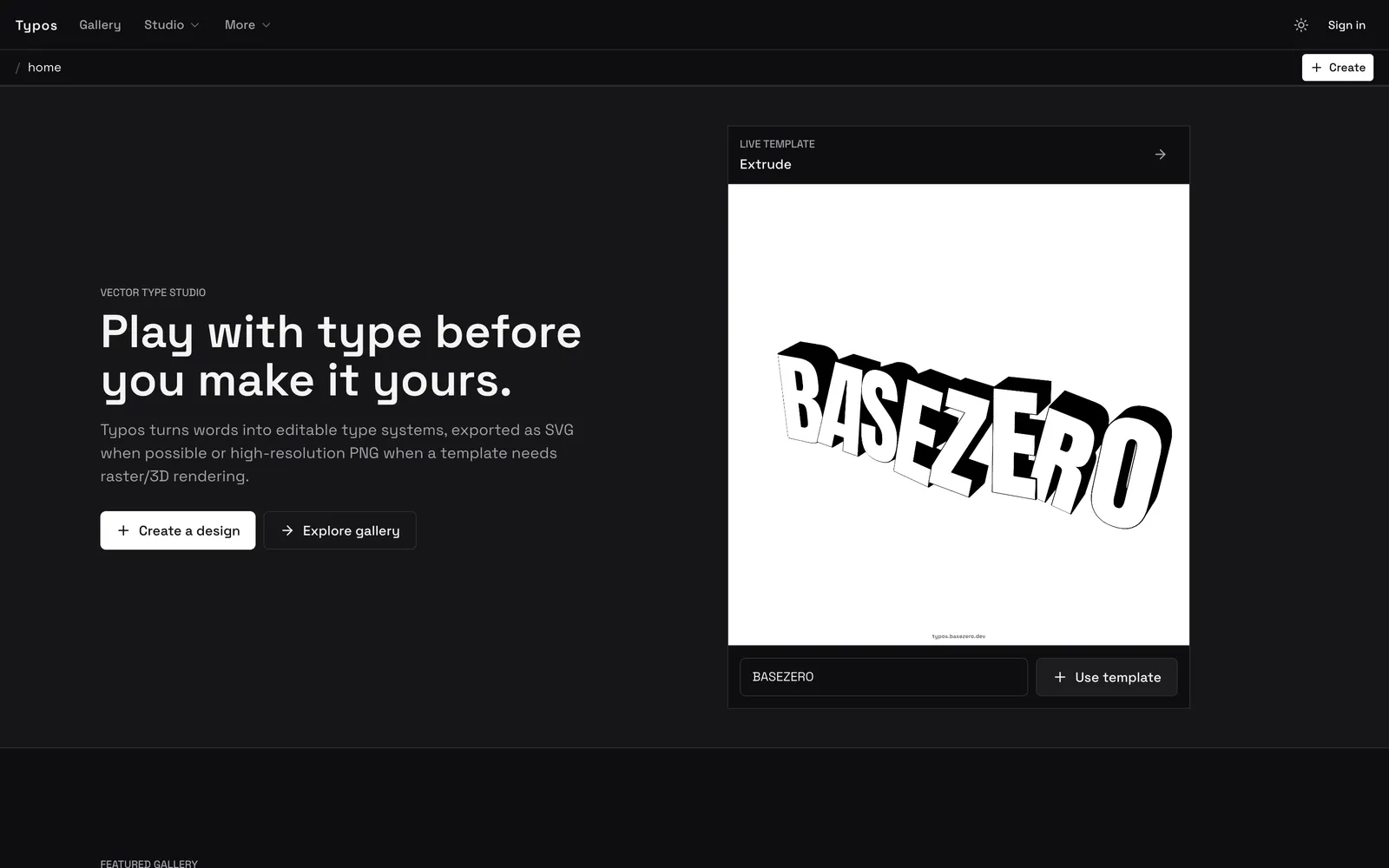 The home page is already the tool: a live template with any word you want.
The challenge
Experimenting with expressive typography usually takes desktop software and a fair amount of craft. typos set out to shorten that distance: anyone should be able to try an idea in seconds and, if they like the result, get a professional-quality file, not a screenshot.
How it works
You pick a template, change the text and adjust its parameters: motion, distortion, projection, spacing and colour. The design is saved as editable and exported as vector SVG or high-resolution PNG.
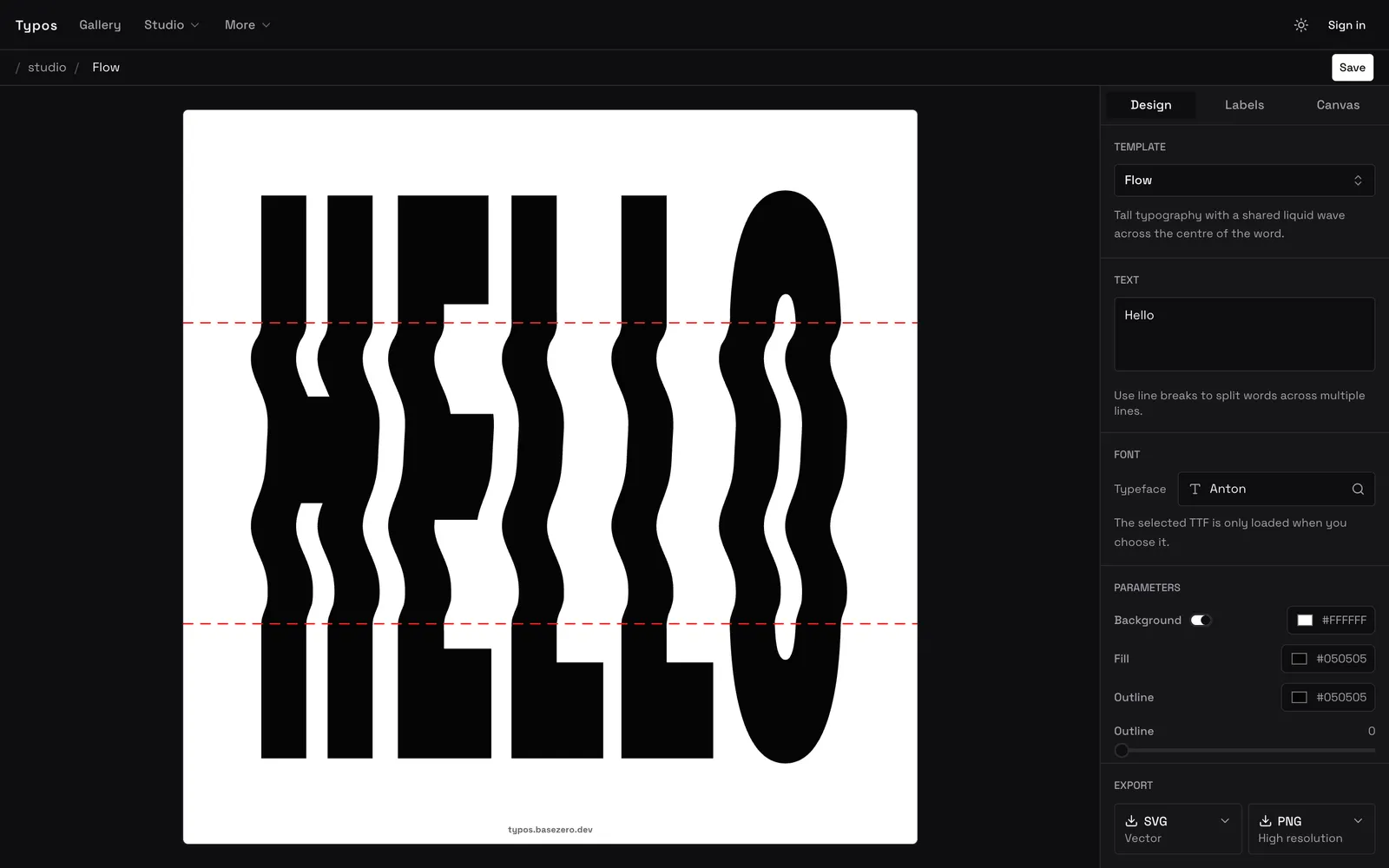 The editor: the artwork in the centre and, on the right, template, text, font, parameters and export.
Every published design can become part of a public profile, appear in the gallery, be remixed or be prepared to become a physical product.
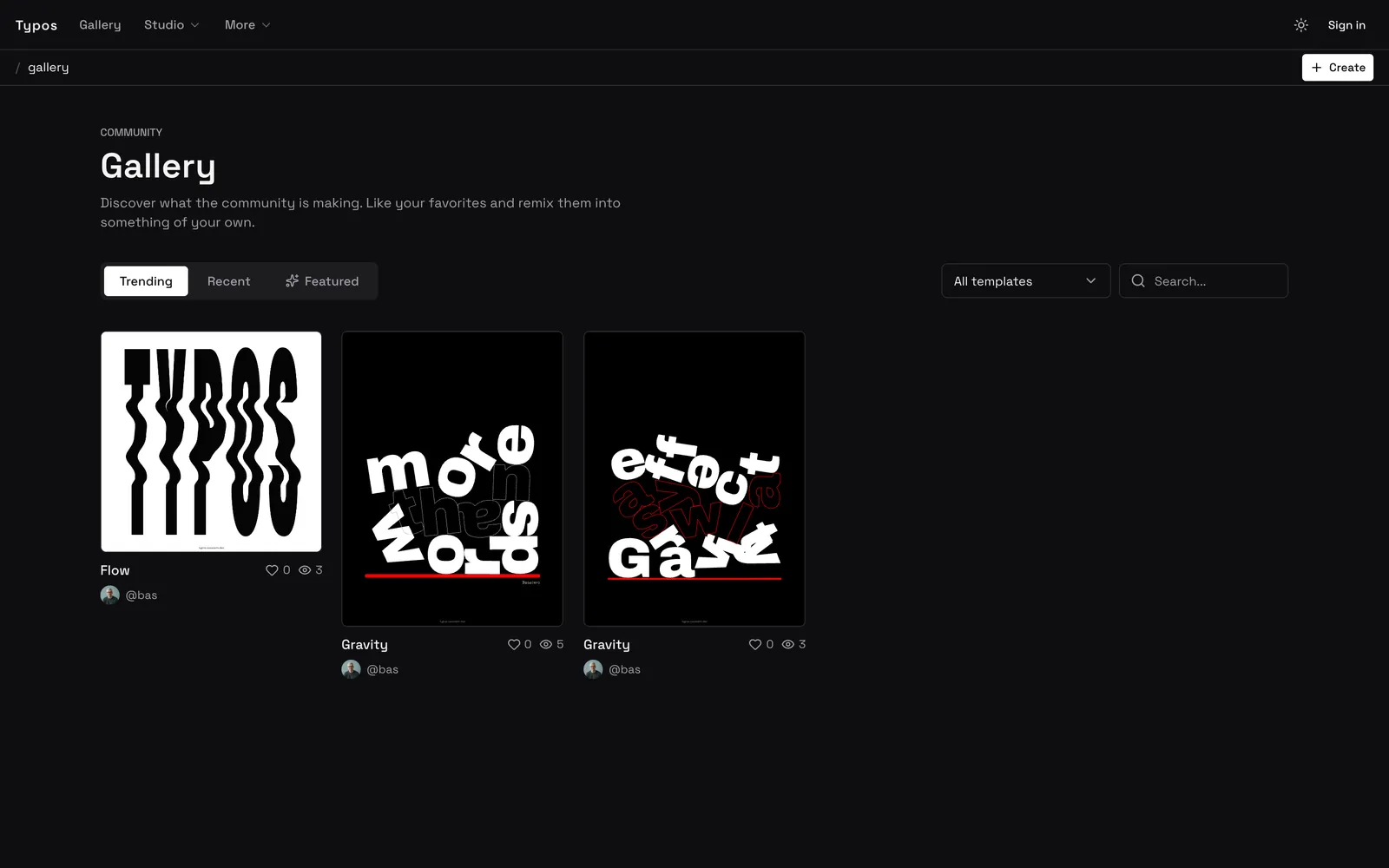 The gallery turns experiments into a public body of work that others can remix.
Technical decisions
Real outlines, not screenshots. opentype.js reads the outlines of the chosen font and each word becomes SVG paths. Geometric operations are done with Paper.js, so the result stays sharp at poster size or on a T-shirt.
SVG whenever possible. Only templates that need real 3D rendering (with Three.js) are exported as high-resolution images. Everything else stays vector, which is what can be printed, edited and reused in another design workflow.
Readable by agents too. typos publishes a product facts page and an llms.txt so search engines and AI assistants understand what it is and what it does. It is the same idea I have applied to this site.
Status
typos is live and small on purpose: I build it on my own, with the patience and limits that come with that. It is the studio's most personal project, and the one that best sums up an obsession: making digital tools precise, useful and a little more human.