A video explains very well, but it does not listen. To check whether someone understood, collect their details or take them down a different path depending on their situation, organisations end up chaining a player, a form, a PDF and some custom development. None of those pieces knows what happens in the others.
Weform brings all of that onto the video itself: information, questions, forms and decisions that change each person's path, with no code, published by link, embed or QR code.
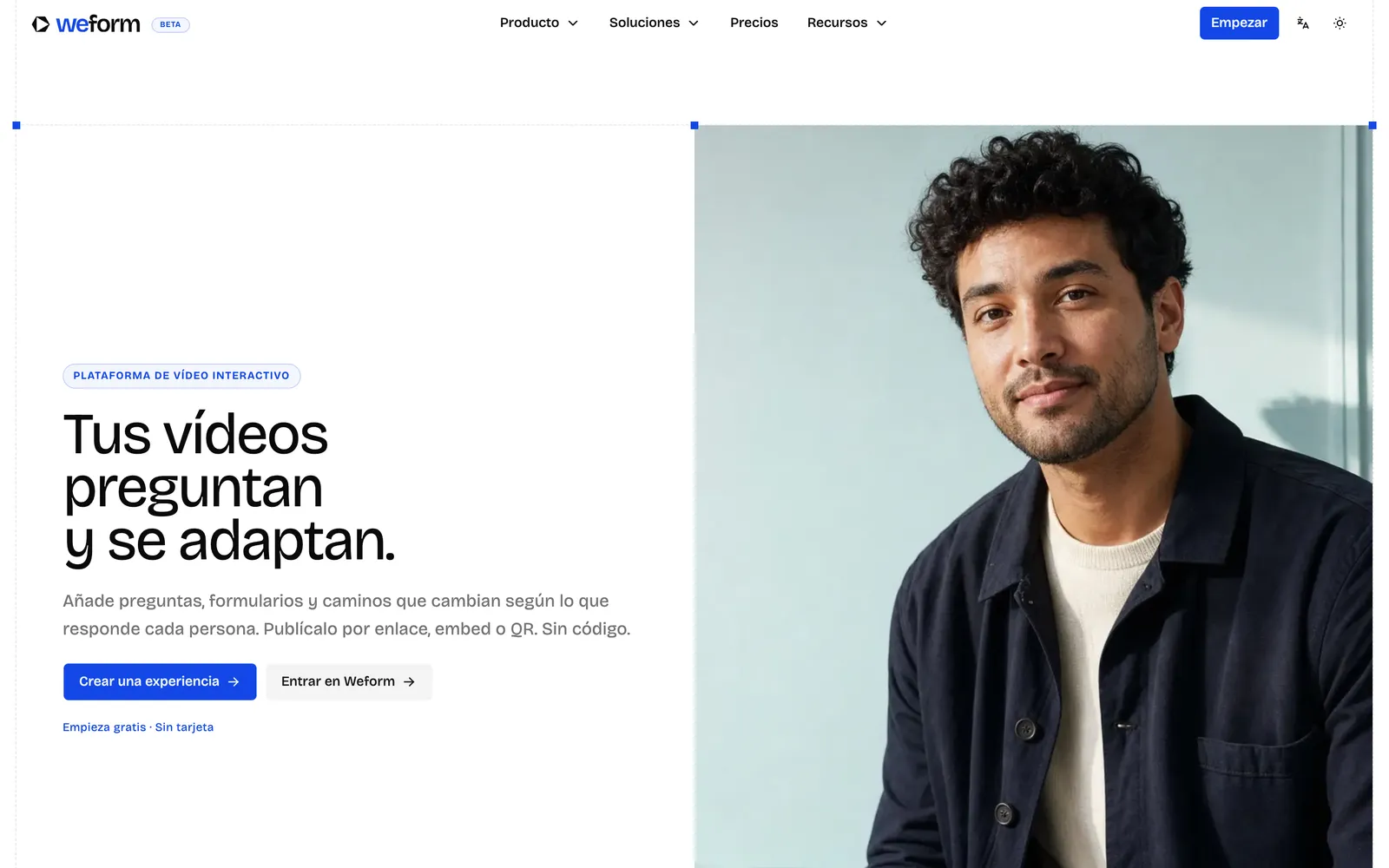 The promise in one line: the video stops being a monologue and becomes a journey.
The challenge
Complete interactive video solutions tend to be expensive and complex for small teams, and the simple ones stop at putting buttons on top of a video. The gap was in between: a tool anyone could use to build a branching journey, test it and measure it, with the solidity of a platform.
It also meant deciding what Weform would not be. It is not a video editor, a chatbot, a full LMS or a generic form builder. Writing those limits down from the start kept out many features that would have complicated the product.
What I built
The product covers the whole cycle in one tool: start, build, test, brand, publish and measure.
- Builder. Steps are placed on the video timeline and each answer connects to the next step through conditions. The journey can be tested on desktop and mobile from the editor itself.
- Player. Works on any device, with subtitles per language, keyboard support and visible focus, and no sign-up for participants.
- Programs. Several experiences can be grouped into courses or ordered blocks with progress and unlocking, without turning Weform into an LMS.
- Results. Sessions, paths and answers for each experience, with export.
- Workspaces per organisation, with separate data, permissions and branding, ready for white label.
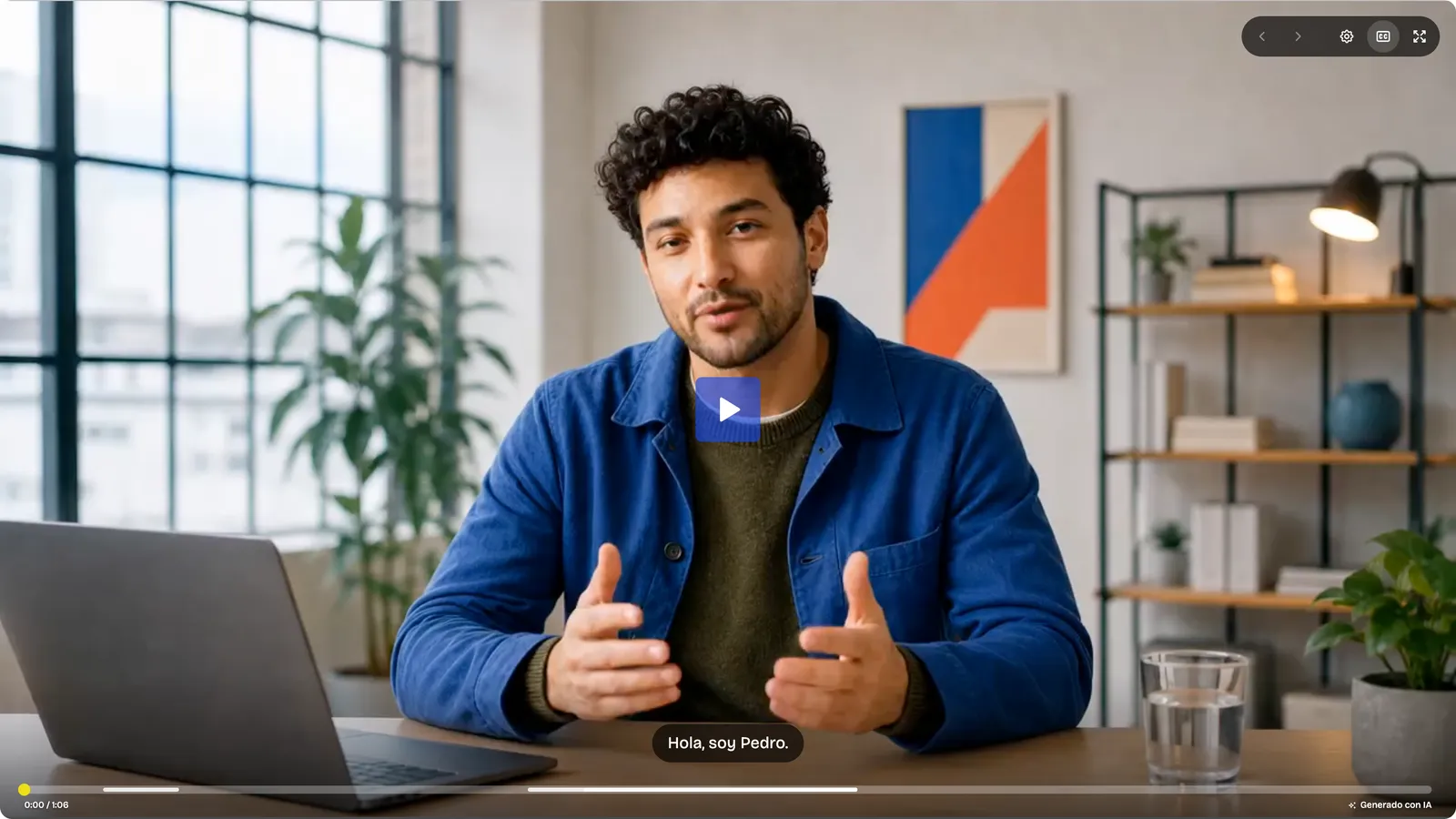 The player is all participants see: it has to be fast, clear and accessible on any screen.
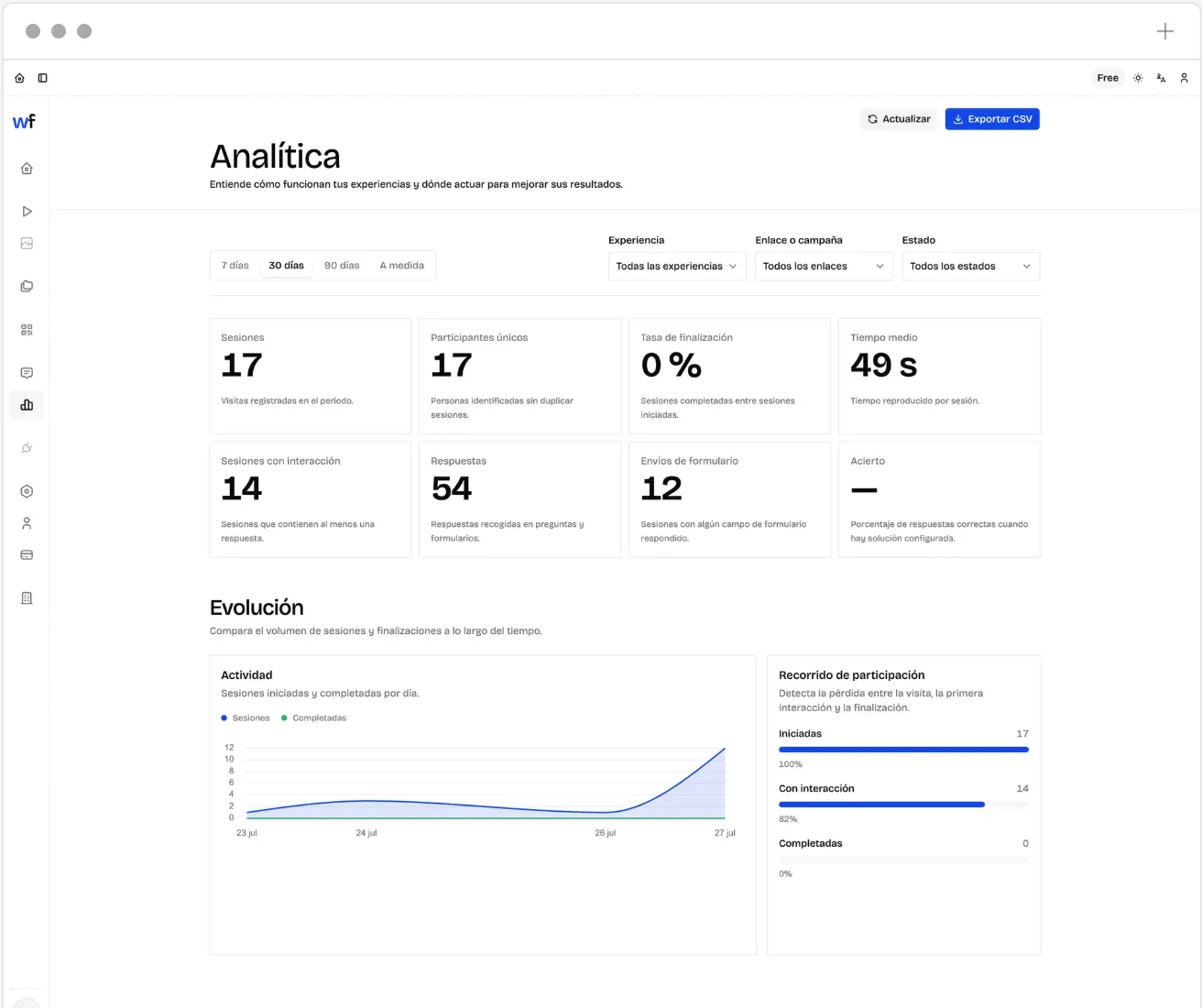 Analytics answers three questions: who watched, what they answered and where they stopped.
Technical decisions
Video served as a product. Videos are processed for adaptive streaming (HLS) and served from Cloudflare R2 through a Worker that validates signed URLs. The same Worker meters the bytes delivered per organisation, because video delivery is the cost that really scales and the plans are based on it.
AI where it saves work. Transcripts and subtitles are generated with AI (Gemini), and their final accuracy stays with the author. It does not replace them; it takes away the most mechanical part.
Accessibility from the start. WCAG 2.2 AA guides the product, with the honesty of not claiming conformance without an audit. The platform provides multi-track subtitles, variants by language and cognitive level, and a base that later made it possible to build Signado on top.
Pricing on what scales. Plans are based on projects, storage, streaming, interactions and team size, with a free plan that needs no card. Participants are never charged.
Status
Weform is live in open beta, with public pricing and a technical base that already powers a second product. For me it shows what building a platform from scratch with an AI-first method means: a lot of speed in the code, and judgement focused on what goes in, what stays out and how it is measured.